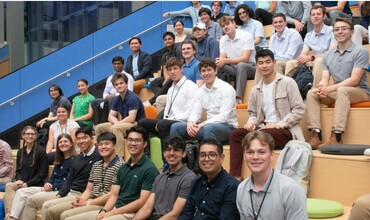
The Draper Scholars Program emphasizes empowering students in 16 key research areas to make the greatest impact. We encourage applicants to align their research with these topics.
Biotechnology
Draper has established a major presence in the biotechnology domain, working with a range of key government and commercial stakeholders on critical applications ranging from biosurveillance and clinical diagnostics to therapeutic screening for drug development and for screening of medical countermeasures for high priority pathogens.
We are interested in exploring Draper Scholar opportunities for both MS and PhD students pursuing graduate research programs in the Life Sciences/Microbiology, Bioengineering, and Public Health, along with a number of related disciplines and academic departments.
Technical Point of Contact
Research Interests
Biosurveillance
Infectious diseases, chemical agents and toxins represent a significant threat to global health security and to the health of our military service members. The convergence of multiple factors has led to emergence of novel pathogens as well as rise of previously controlled infections. Global instabilities and rising conflicts worldwide also increase the threat of release or use of chemical or biological agents that pose a danger to the general public and to warfighters in particular. The ability to rapidly monitor the presence of threat agents or the spread of disease is crucial for prevention, interference and control. Threat surveillance often requires physical sample collection at relevant sites, such as urban wastewater or air handling units, potentially nefarious laboratory operations, or remote outbreak locations. Sample evaluation typically entails delivery to laboratories with advanced capabilities for characterization, or transferal of those capabilities to the site. Example approaches include placement of distributed sensors for biological/chemical/radiological agents, and in-line monitoring of water and air for specific bioagents to identification of disease-related observations in large electronic data sets related to human behavior. Potential technological solutions for these challenges include point-of-collection analysis tools, standoff detection, and living sensor systems.
Modeling Emerging and Priority Pathogen Infections for Medical Countermeasure Development
Draper has been developing organ-on-chip, or microphysiological systems (MPS) technologies toward a range of applications for over two decades, with a central focus on engineered tissues for disease modeling, safety testing and drug development, and for screening of MCM against high priority pathogens and other threat agents. While engineering platforms for these model systems are fairly well-established, several key technical advances could augment and expand capabilities toward key drug development and biosecurity applications. These include: 1) the development of new MPS organ and disease models beyond Draper’s current portfolio, with particular interest in neural and cardiac models; 2) the integration of immune components into organ models; 3) the development of new disease models, such as for thrombosis and coagulopathy applications; 4) Automation of downstream assays via innovations in microfluidics, next generation sequencing, artificial intelligence/machine learning and high content imaging are also key to driving down the costs and increasing the throughput of these model systems. Advancements in MPS technologies will enable rapid response to emerging threats and improve MCM development.
Development of High-Fidelity Multi-Omics Capabilities
Modeling emerging threats and developing mitigation strategies requires an ever-advancing set of capabilities for analyzing data obtained from clinical samples, preclinical animal studies, and model systems such as MPS. Conventional analytical tools provide a limited window into the dynamics of pathogenesis, including entry, replication, and immune downregulation, which has resulted in a dearth of countermeasures despite years of research. Novel capabilities in single-cell analysis and in capturing and probing multi-omics datasets including proteomics/genomics, epigenomics and the microbiome, will be critical in designing increasingly complex and powerful model systems for the investigation of disease mechanisms and evaluation of therapeutic approaches. Integration of these multi-omic readouts at both the tissue and single-cell levels will ultimately contribute to accelerated response to emerging threats, and reduced costs and wider availability of vaccines and therapeutics during health emergencies.
Have Any Questions?
To learn more or stay up to date with our key areas, please fill out the below contact form.