Draper Receives Additional Funding from BARDA to Study Filovirus Infection
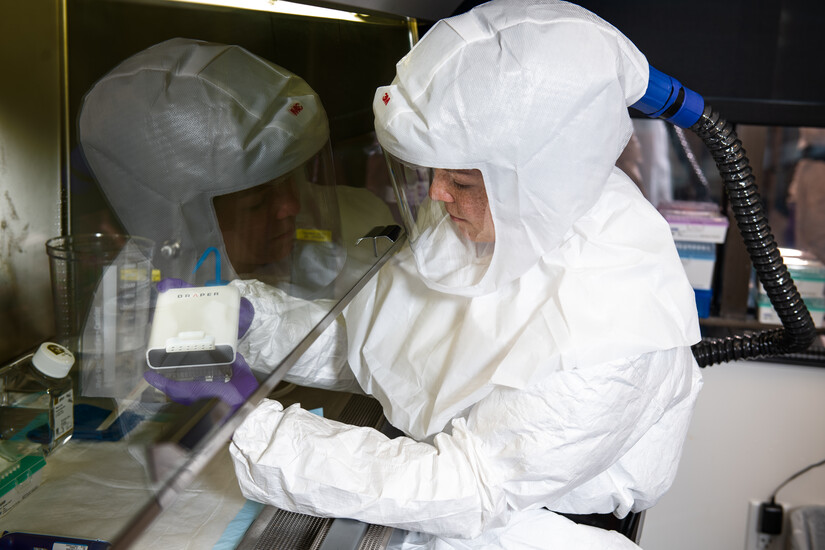
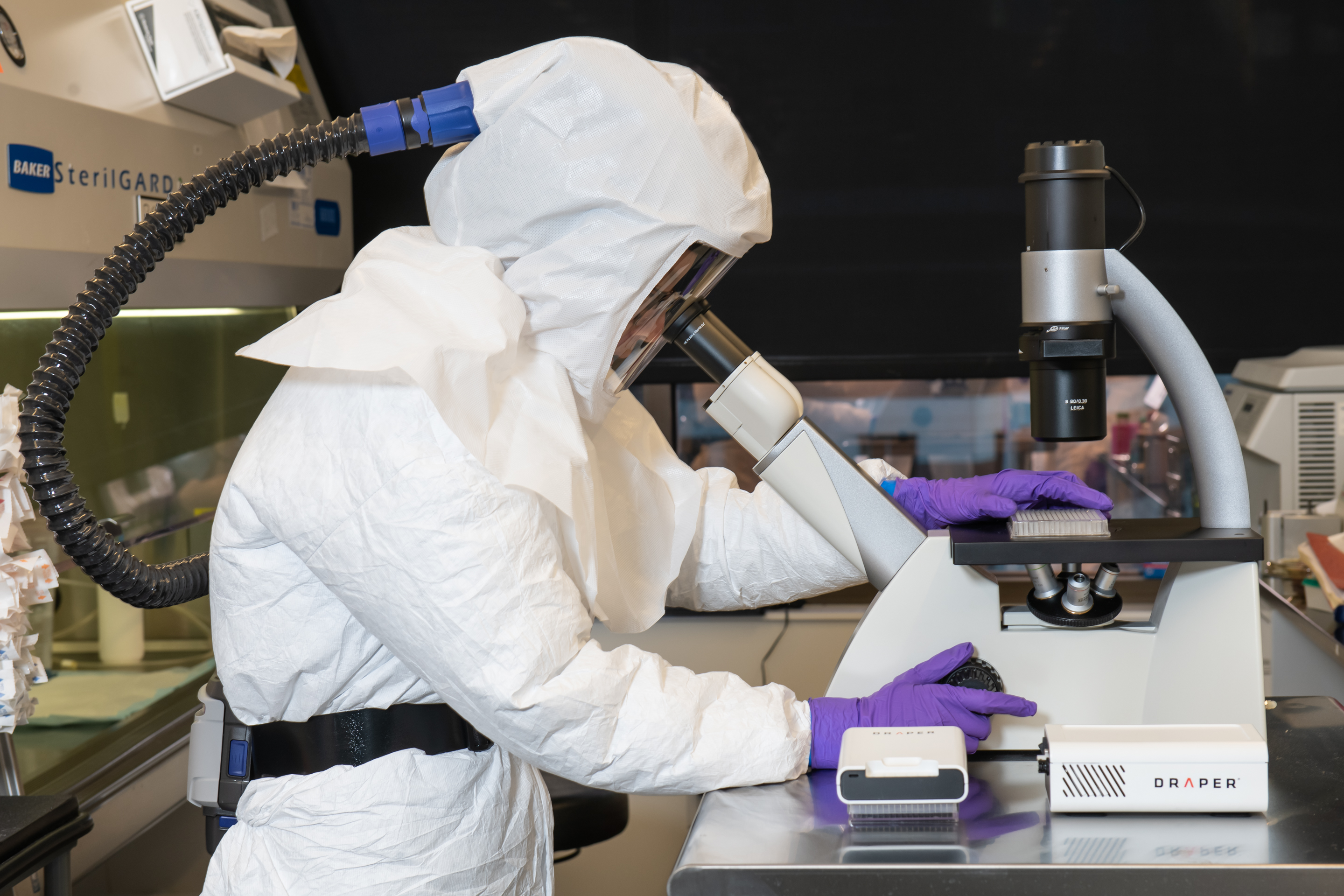
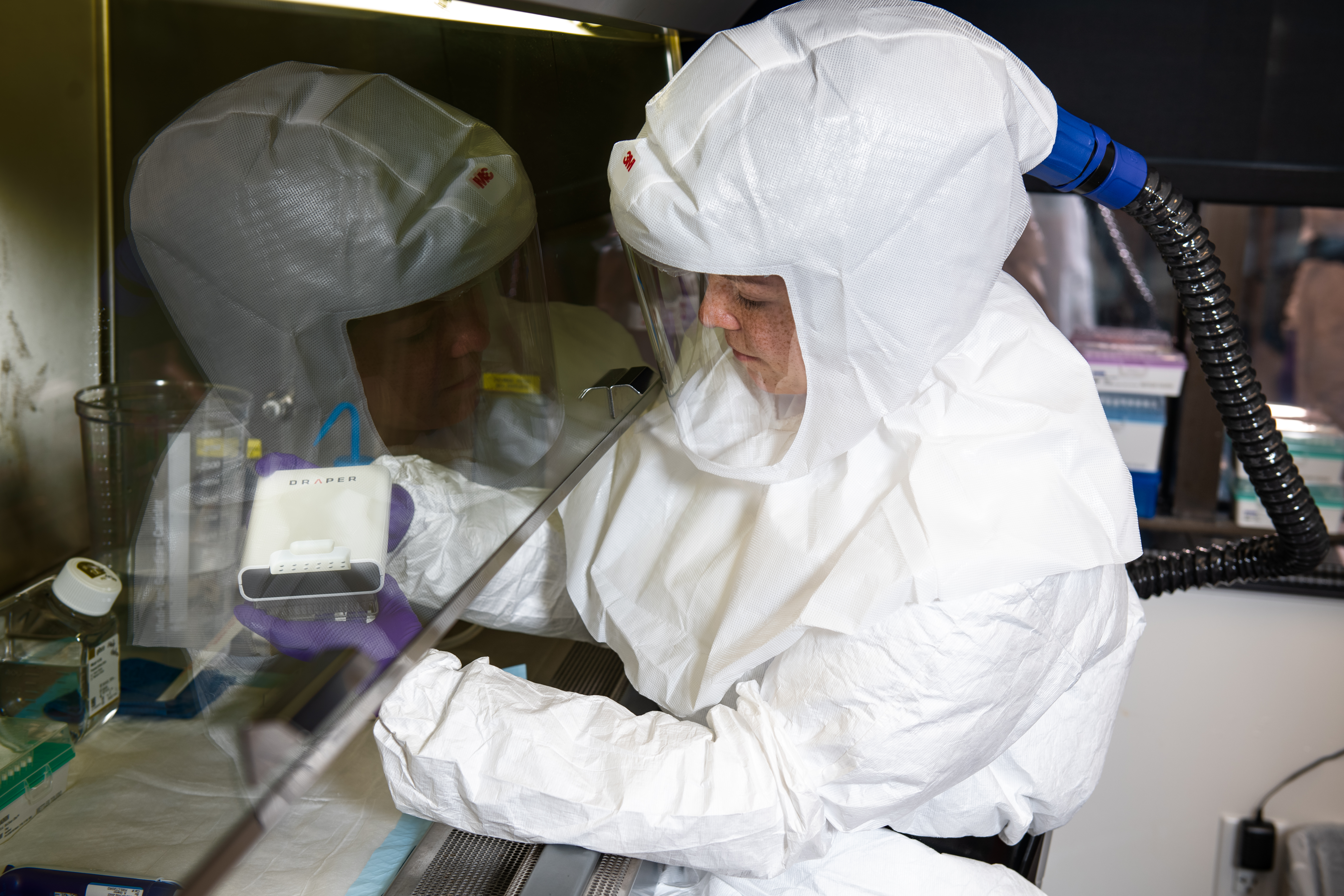
CAMBRIDGE, Mass. – Draper announced it has received additional funding from the Biomedical Advanced Research and Development Authority (BARDA) for its project, Screening Countermeasures In vitro for Filovirus Infections (SCIFI). The funding is part of an earlier award from BARDA and will be used to prepare Draper's flagship microphysiological system (MPS), PREDICT96, for use testing antiviral drugs in a biosafety level 4 (BSL-4) laboratory.
"Building on Draper's extensive experience developing MPS for high containment, the team is addressing key system infrastructure preparations to facilitate the project's transition into maximum containment," said Vishal Tandon, Ph.D., Group Leader, Multiphysics Microfluidics Design and Distinguished Member of the Technical Staff at Draper. "This will enable us to start investigating medical countermeasures for Ebola virus disease and other hemorrhagic infections immediately following our work developing the base model."
The overall objective of SCIFI is to use PREDICT96 and other cross-cutting engineering technologies to improve the scientific understanding of how filoviruses attack human tissues with the end goal of accelerating the discovery and development of countermeasures against this class of diseases. Filoviruses cause a complex and life-threatening pathology and are responsible for dozens of outbreaks, including most recently in the Democratic Republic of the Congo in September 2025, which resulted in 45 deaths. Many aspects of filovirus pathogenesis are difficult to model using traditional cell culture and animal models, particularly the cascading events that lead to vascular dysfunction, subsequent hemorrhage, and death.
To do this work, Draper has partnered with Boston University's National Emerging Infectious Disease Laboratory (NEIDL), one of the world's leading research organizations for infectious disease research. NEIDL will provide critical expertise in virology specific to the pathogenesis of filovirus infections for the SCIFI program and will lead filovirus infection studies within PREDICT96 in its high-containment (BSL 4) lab facilities.
"At NEIDL, our extensive experience studying hemorrhagic fever viruses within a safe and secure environment allows us to accelerate Draper's microphysiological system technology," said NEIDL Interim Director Dr. Robert Davey. "Our work together will help advance critical research on countermeasures for filoviruses and other high-consequence viruses." NEIDL's Dr. John Connor highlighted the progress, noting, "Our earlier studies with the PREDICT96 platform have already revealed promising strategies to rapidly evaluate therapies for these dangerous pathogens. We look forward to working with Draper with this new funding support."
The SCIFI project is led by David Sutherland, Ph.D. (Project Manager), Vishal Tandon, Ph.D. (Principal Investigator), John Connor, Ph.D. (lead NEIDL investigator), and Christine Fisher, Ph.D. (Technical Director).
BARDA is part of the Administration for Strategic Preparedness and Response (ASPR) within the U.S. Department of Health and Human Services (HHS). Draper's long-term goal is to support BARDA's development and evaluation of medical countermeasures (MCMs) for national health security. In September 2023, Draper signed an Other Transaction Authority (OTA) agreement #75A50123C00042 with BARDA, which is valued at up to $90.5 million over a five-year period.
This project has been funded in whole or in part with federal funds from the Department of Health and Human Services; Administration for Strategic Preparedness and Response; Biomedical Advanced Research and Development Authority, under OT number: 75A50123C00042.
About Draper
Draper is a non-profit research, development, and manufacturing company that solves some of the nation's most important challenges. With more than 2,500 employees working in collaboration across 12 locations, Draper delivers transformative, mission-driven solutions that successfully meet our customers' requirements. These efforts focus on four critical mission areas: Strategic Systems, Space Systems, Electronic Systems, and Biotechnology Systems. To extend our legacy into the future, the Draper Scholars program engages with the next generation of innovators while DraperSPARX™ seeks to partner with startups and small businesses that can further our mission. To learn more about Draper, visit www.draper.com.
About the NEIDL
Boston University's National Emerging Infectious Diseases Laboratories (NEIDL) is a state-of-the-art research facility equipped with Biosafety Level 3 (BSL-3) and Biosafety Level 4 (BSL-4) laboratories, enabling scientists to safely study emerging and re-emerging infectious diseases. NEIDL has the nation's only BSL4 simulator space, a feature that speeds development of alternative models of infectious disease. Ongoing research at NEIDL includes understanding how pathogens cause disease and translating these findings into diagnostics, vaccines, and therapeutics that protect human health – from initial findings to FDA licensure enabling studies. Through strategic partnerships with government agencies, industry, and academic institutions, NEIDL accelerates the development of life-saving solutions for emerging infectious threats. To learn more, visit www.bu.edu/neidl/.
Released January 20, 2026