The Systems That Stayed When History Moved Fast
In 2026, the United States marks 250 years since its founding. Over that time, the country has moved through moments that demanded speed, precision, and resolve. We tend to remember the visible milestones: the launches, the speeches, the breakthroughs. What we don’t often see are the systems that made those moments possible.
For nearly a century, Draper has built those systems.
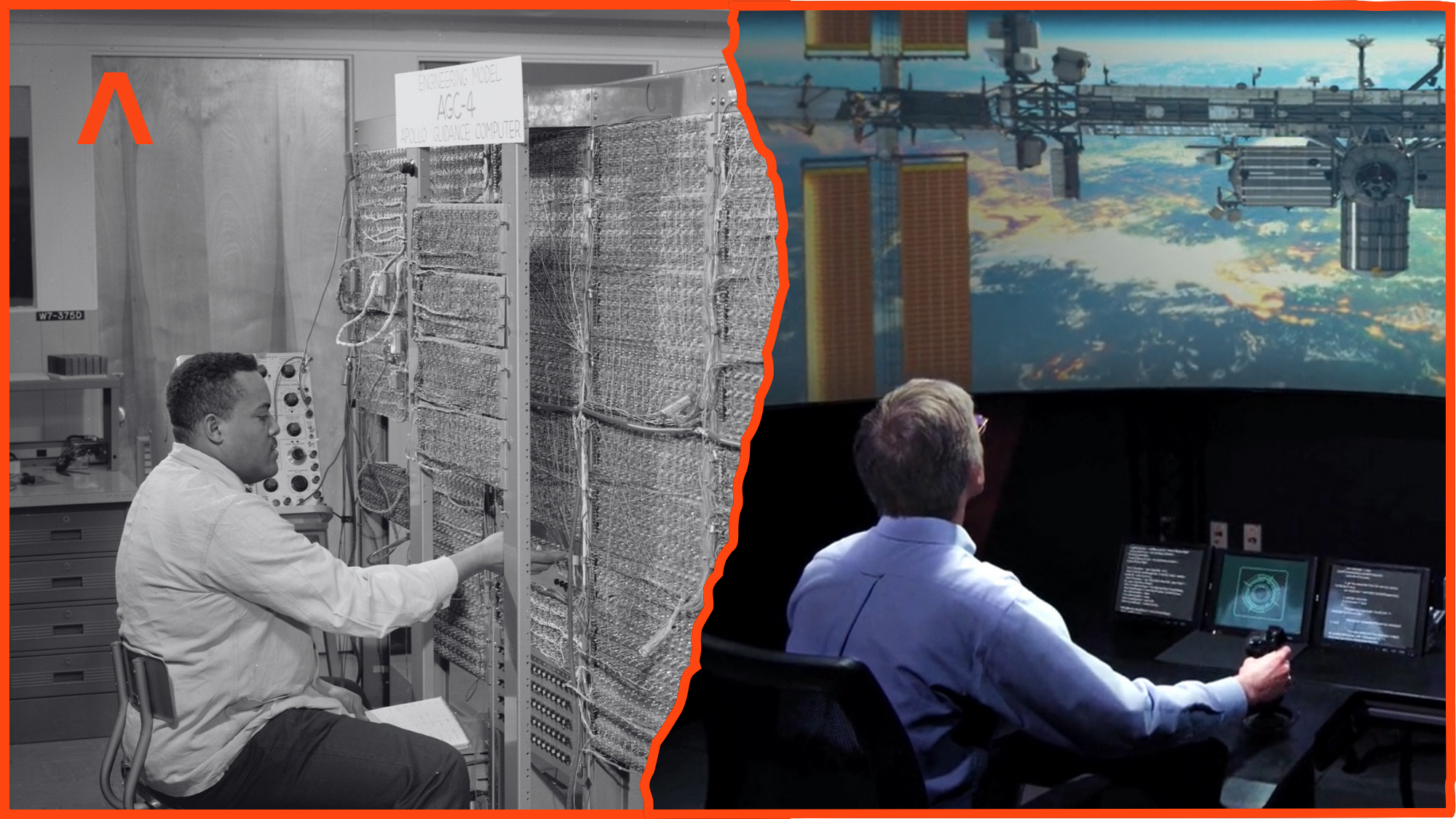
When the nation committed to landing a man on the moon, the challenge went well beyond building a powerful rocket. The spacecraft had to know where it was, where it was going, and how to adjust in real time along the way. Draper engineers developed the guidance, navigation, and control systems that enabled Apollo to reach the lunar surface and return home safely. The Apollo Guidance Computer, built to operate reliably in space, pushed the boundaries of real time digital computing and embedded software.
Apollo is often remembered for what the world could see. Inside Draper, it also reflected engineering work that had been underway for years. Charles Stark Draper built his laboratory around a straightforward idea: we make things that work. Early advances in inertial navigation helped aircraft and submarines operate independently of external reference, laying the groundwork for guidance systems used in the Apollo program. That same discipline continued to shape digital fly-by-wire systems and advances in microelectronics technologies that expanded sensing and control in new domains.
That expectation shaped more than hardware and software. It shaped how engineers approached testing, validation, and accountability. It shaped how teams documented their work and reviewed it. It shaped the culture.
Today, the applications look different, but the underlying discipline remains familiar. Draper guidance, navigation, and control software supports NASA’s Artemis missions as the nation prepares to return humans to the moon. Across electronic systems, strategic deterrence, microelectronics, and biotechnology, teams continue to solve problems where reliability is not optional. The context changes, the requirement does not.
As America approaches its 250th year, it is worth recognizing that national progress depends on institutions willing to sustain technical depth over time. Draper has operated across decades of scientific advancement, national ambition, and technical transformation. It has adapted to new missions and new domains while maintaining the engineering discipline that defines its work.
As Draper looks toward its centennial decade, that long view continues through Draper NXT, a sustained effort to strengthen the organization’s workforce, infrastructure, and technical depth. The initiative is grounded in the same principle that shaped the laboratory in 1933: build systems that perform in the real world and maintain the capability to do so across generations.
The next era will bring new missions and new technologies. Draper will meet them the way it always has, by doing the work carefully, testing it thoroughly, and holding itself to the standard that has defined it for nearly a century.