Draper Achieves Sustained Recirculation of Immune Cells in a Microphysiological System (MPS)
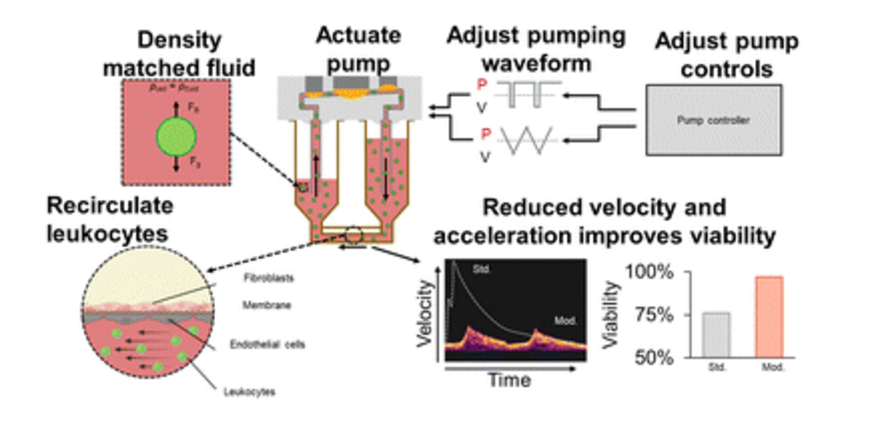
CAMBRIDGE, Mass. – Draper scientists have successfully produced an extended recirculation of immune cells in a high-throughput microphysiological system (MPS). The studies achieved long-term recirculation (up to 24 hours) of primary human neutrophils with high viability (>90%) and low activation using Draper's flagship MPS, PREDICT96.
"This is a very impactful development for the field because the immune response plays a critical role in injury, infection, and disease," said Elizabeth Wiellette, Ph.D. and Lab Fellow at Draper. "The ability to deliver immune cell-rich flow in a high-throughput MPS platform will enable more accurate modeling and understanding of human (patho)physiology in a variety of contexts."
Developing an MPS that supports physiologically relevant immune cell circulation poses significant biological and engineering challenges due to the delicate, short-lived nature of immune cells and the physical stresses imparted by many pumping systems. Neutrophils are notoriously short-lived once isolated from human blood, typically allowing in vitro studies of two hours or less in MPS systems, and often under very low flow that is not physiological.
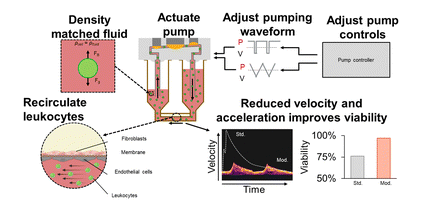
To protect cells from the original high shear forces in the pump manifold, the Draper team adjusted aspects of the pump controller and pump dynamics, which reduced velocity and acceleration of fluid at the pump. In addition, Draper modified the media to maintain cells in suspension during recirculation. Finally, a system-level model was developed to enable highly controllable cell flow dynamics through the pump and microfluidic tissue models.
The work demonstrates that New Approach Methodologies (NAMS), including MPS such as PREDICT96, can play a critical role in improving our holistic capacity to accurately and rapidly characterize biothreats. It also addresses critical gaps in the Food and Drug Administration's regulatory and scientific enterprises, including the mandate to reduce the prevalence of animal testing in pre-clinical safety studies.
A research paper published in Lab on a Chip describes the recent achievements. The paper, Enabling the recirculation of leukocytes in a high-throughput microphysiological system (MPS) to study immune cell-vascular tissue interactions, was co-authored by Draper's Tyler Gerhardson, Nerses J. Haroutunian, Ryan Dubay, Joseph N. Urban, Anthony Quinnert, Brett C. Isenberg, Samuel H. Kann, Halee Kim, Robert Gaibler, Hesham Azizgolshani, Elizabeth L. Wiellette, and Corin Williams.
Lab on a Chip, published by the Royal Society of Chemistry, is the premiere journal that focuses on cutting-edge research in the field of miniaturization.
This work was funded by the Biomedical Advanced Research and Development Authority (BARDA), part of the Administration for Strategic Preparedness and Response within the U.S. Department of Health and Human Services, as part of the CURIE project. The goals of the CURIE project are to study the natural history of gastrointestinal acute radiation syndrome (GI-ARS) with the potential to identify biomarkers and drug targets and to establish and utilize a predictive platform for evaluation of radiation countermeasure drug candidates.
Draper is a leader in microphysiological systems used to model diseases and drug responses. In its 25-year history of MPS development, Draper has pioneered many groundbreaking advances, including long-term culture of mammalian cells in a microfluidic device, the first durable multi-organ system, the first multiplex instrumented MPS, and the first robust and reproducible operation of MPS in high containment.
This project has been funded in whole or in part with federal funds from the U.S. Department of Health and Human Services; Administration for Strategic Preparedness and Response; Biomedical Advanced Research and Development Authority, under OT number: 75A50123C00042.
About Draper
Draper is a non-profit research, development, and manufacturing company that solves some of the nation’s most important challenges. With more than 2,500 employees working in collaboration across 12 locations, Draper delivers transformative, mission-driven solutions that successfully meet our customers’ requirements. These efforts focus on four critical mission areas: Strategic Systems, Space Systems, Electronic Systems, and Biotechnology Systems. To extend our legacy into the future, the Draper Scholars program engages with the next generation of innovators while DraperSPARX™ seeks to partner with startups and small businesses that can further our mission. To learn more about Draper, visit www.draper.com. Follow Draper on LinkedIn and Instagram.
Released February 18, 2026